

Marissa Lovell launched From Boise in March 2021.
Nearly five years later — after a cashflow crisis, becoming a mom, and one perfectly timed hire — she crossed $100,000 in revenue, buoyed by a growing network of local newsletter operators who are getting sharper together.
In this episode:
📰 How a twice-weekly Boise newsletter became a six-figure business
💵 The hire that tripled revenue in one quarter
📲 The Instagram-to-email funnel driving the newsletter’s subscriber growth
— Natalia Pérez-González, Assistant Editor

00:00 Introducing Marissa Lovell
01:00 From nearly quitting to $100k+ revenue
06:18 The once-a-month growth strategy
09:34 Early stage experimentation
12:15 Accidentally growing a “personal brand”
17:56 Zero to 10k subscribers in one year
23:20 How big can a local newsletter be?
24:18 How to monetize a local newsletter
30:37 Investing in a website that feels right
33:27 Why a discount card for the community didn’t work
38:14 Connecting a community with dinner clubs
42:15 Building in public and empowering female entrepreneurs
46:58 Creating in way that suits you
52:35 Becoming a six-figure solopreneur
55:09 Doubling revenue for 2026
🎧 If you prefer a podcast platform other than YouTube, we’re on Apple, Spotify, and all the rest.

Audible is hiring a Social Media Manager (Newark, NJ)
This role will lead the brand’s social presence across North America — managing channels day-to-day, developing innovative content, and driving marketplace expansion.
Listed compensation: $86,700–$151,700
Eleven Labs is hiring a Short-Form Content Creator (remote)
Have you ever seen a role with only one bullet under the “required” section? This one just says: “You’ve scaled at least one Instagram or TikTok account to 50k+ followers.”
No listed compensation.
MoveOn is hiring a Social Media and Content Intern (remote; U.S.-based candidates only).
An ideal role for anyone trying to break into the world of political social media.
No listed compensation.
Do you want to advertise an open role in Creator Spotlight? Reply to this email.


Building a local newsletter without a blueprint
When Marissa Lovell left her PR agency job in 2018, she had a clear goal: earn six figures working for herself.
By mid-2025, she was close to giving up. She hadn't paid herself in months; going back to full-time employment felt responsible, necessary, inevitable.
It wasn’t. By year's end, Marissa’s twice-weekly local newsletter, From Boise, had crossed $100,000 in revenue.
When Marissa first launched the newsletter in March 2021, there was no local newsletter playbook to follow. Today, depending on the tuning of your X or LinkedIn algorithms, it’s a booming-hot topic. We’ve fanned that fire here at Creator Spotlight, interviewing notable operators like Ryan Sneddon and Michael Kauffman.
Boise itself was in flux. The pandemic had scrambled the city, flooding it with transplants who didn't yet know how to live there, where to go, what to do.
So Marissa ran Meta ads, posted in neighborhood Facebook groups, and pitched herself to local TV stations — whatever she could do to get From Boise in front of people. She hit 10,000 subscribers in her first year, all while managing contract PR work and freelance clients concurrently.
A streamlined, simple sending cadence kept her content calendar manageable:
Original reporting on Tuesdays
Event listings on Thursdays
She’s kept this publishing routine since the beginning, never missing an issue in nearly 500.

A side project matures
“Becoming a mom has been the best thing for my business.”
For the first three years, From Boise was a side project.
By June 2024, Marissa was exhausted, pregnant, and juggling three jobs. Something had to give, so she decided to go all in on her newsletter. At the time, she had $30,000 saved and a small team of contractors helping with content and social media, but when the baby arrived a month early, the economics unraveled.
Before the baby, there were always backup options: freelance work, maybe a café job. Parenthood blocked those exits. "This has to work," she’d thought. "This is my only option."
@from.boise The Boise Discount Card on Idaho Today @KTVB 💌 10% off, 12 local businesses This is an easy way to support your small business community ... See more
Six years after setting out to earn six figures on her own, Marissa was nowhere close to her goal. Sponsorship sales — always her weakest link — had never been more urgent, and with a newborn at home, she'd never had less bandwidth to chase them.
Then she met Leslie, a recent college graduate with a marketing background — and, crucially, a From Boise reader.
A creator herself, Leslie was eager to delve into the sales side of the business. Marissa offered her a job almost immediately, but made the stakes clear: if Leslie couldn’t multiply revenue by the year’s end, she wouldn’t have a job; From Boise might not exist.
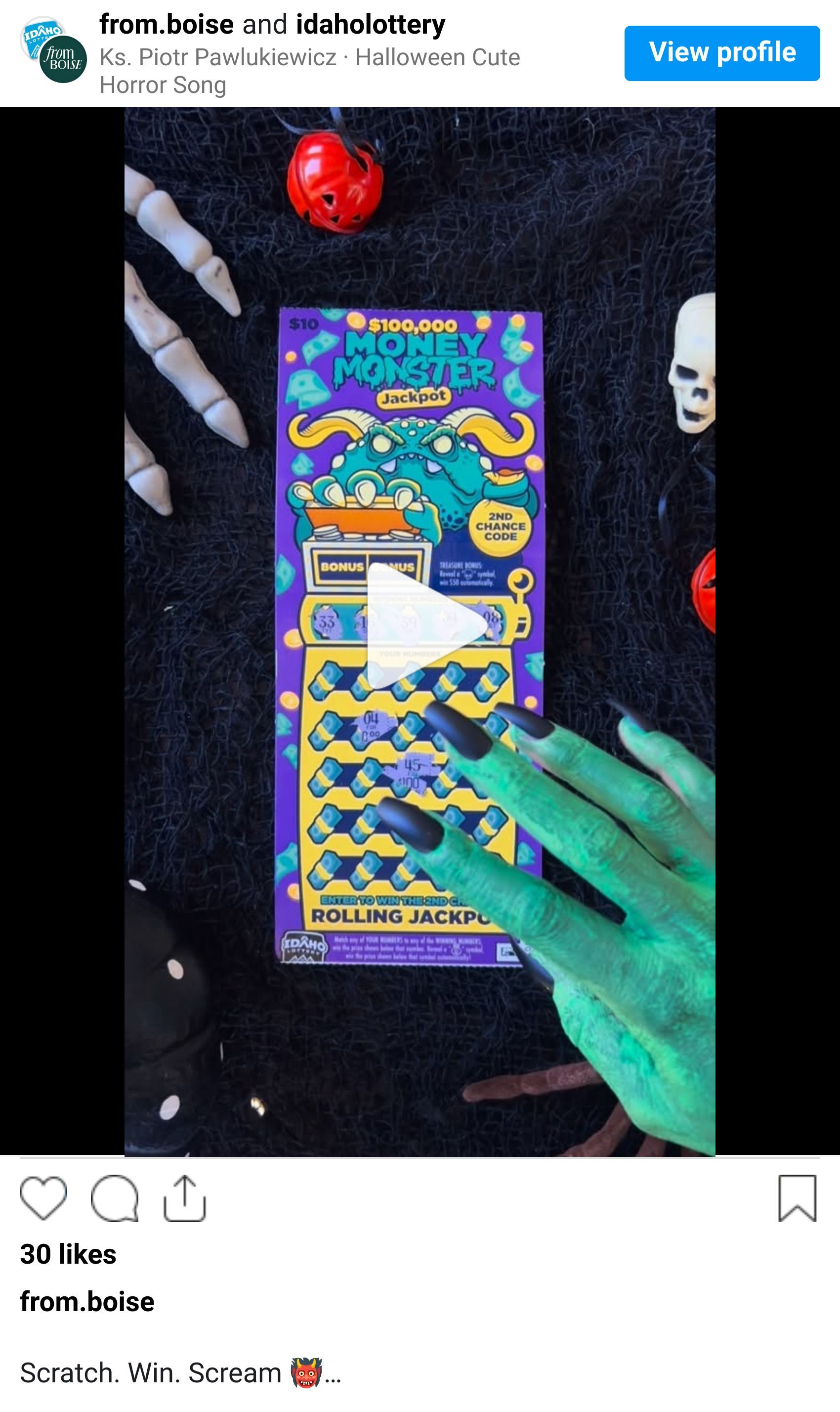
So Leslie rebuilt the media kit, pushed partners for longer-term commitments, and with time to spare, landed a year-long partnership with the Idaho Lottery. Between Q2 and Q3 2025, revenue tripled.
At the same time, Marissa decided to let go of her other contractors and bring content production completely in-house.
She'd started From Boise because she loved writing about her city, and somewhere in the chaos of scaling she'd drifted from the work that made the business meaningful.
Today, the operation is run by two core people: Marissa handles content, and Leslie sells. When necessary, they call on a rotating group of freelance writers to support the Tuesday issue, at a $350 per-article rate.
Crossing six figures
In 2025, From Boise crossed the $100,000 revenue mark. It took seven years, a pandemic, a baby, and one perfectly timed hire to reach that goal.
Roughly $93,000 came from 56 sponsors, with the rest coming from products, affiliates, and reader donations.

For 2026, she's aiming higher: $250,000 in revenue and 35,000 subscribers, up from 23,000 at the time of our interview.
Marissa hasn't stopped experimenting — and many of her newest ideas have come from The Newsletter Club, the private community of local newsletter operators founded by Catskill Crew creator Michael Kauffman.
Last fall, she launched a $20 discount card offering one-time deals at local businesses. It sold 136 units, bringing $2,700 total revenue. Not a breakout success, but it offered a useful lesson to build on: a single 10% discount wasn't compelling enough. Next time, it'll be bigger — or even recurring.
Her newest bet, also inspired by tactics shared in the Club, has been community dinners through DNNR, a platform that matches strangers for group meals. The first event sold 96 of 120 seats and cleared over $1,000 before anyone ordered an appetizer.
She's also rethinking what sponsorship can look like. For years, Marissa assumed a local newsletter meant local advertisers, but local marketing budgets only stretch so far. Then sponsorship coach Justin Moore prompted her to expand her approach: "You live in Boise — do you only use local products?"
She doesn't, and neither do her readers.
As Boise's airport continues to expand, adding new routes as the population grows, her dream partnership for the year is with Alaska or Delta, the airport’s two main airlines. A national brand, a local audience. The newsletter she built by hand, thriving and sustainable.
Connect with Marissa on LinkedIn.
Learn more about From Boise.

A content calendar built for growth
Marissa's newsletter format and rhythm haven't changed since March 2021, and that’s part of her strategy. Her business hinges on this consistency.
From Boise runs on a simple cadence:
Tuesdays: She publishes an original story about local people, places, or history.
Thursdays: She publishes a massive list of weekend events.
Listen to your audience
Marissa’s readers often requested that her Thursday events newsletter come out earlier so they could plan their weekends in advance. She didn’t want to mess with the established cadence, so instead, she offered them a new product.
Now, every month, she publishes a "plan ahead" guide — a comprehensive rundown of events for the upcoming month. Sometimes it replaces the Tuesday newsletter; other times it goes out off-schedule on Monday or Wednesday. In January, she published an edition covering all of 2026.
The events don't have to be major. Some are big festivals or concerts. Others are what Marissa calls "quirky little things" — a pop-up dinner, a weird community gathering, something she personally finds interesting. The value is the same as her other newsletters: personal curation.
Turn your content into a subscriber funnel
The plan-ahead guide serves existing subscribers, but it also functions as a top-of-funnel acquisition tool. Here's how Marissa turns a piece of content into a repeatable growth lever:

Create the guide — a genuinely useful resource people want to save and share
Promote it with a simple reel — nothing fancy, just a quick video pointing to the resource
Capture emails through ManyChat — comment a keyword, get the guide DM'd, enter email to subscribe
Boost for five days — push beyond existing followers to people actively searching for Boise events
The entire conversion happens inside Instagram — someone searching "things to do in Boise this month" finds exactly what they need, and subscribing is the natural next step.
The resource doesn't have to be an events guide. The format is interchangeable; the structure is what matters: useful resource → social distribution → native capture → paid amplification.
A finance newsletter could package its most-requested market explainer
A B2B operator could turn their best frameworks into a downloadable toolkit
A food writer could compile seasonal recipe roundups
Experiment with formats
Aside from her monthly explore guides, Marissa's now testing variations of new product offerings — like a quiz ad called "What Boise bar are you?" with options ranging from a fancy speakeasy to a country bar, a karaoke spot, and a dive bar. The quiz captures email at the result, but the format is inherently more shareable and engaging than a static guide.
The key insight is what she's not changing: the underlying Tuesday/Thursday rhythm that readers and sponsors depend on. The core stays fixed, and her growth experiments happen around the edges.
